
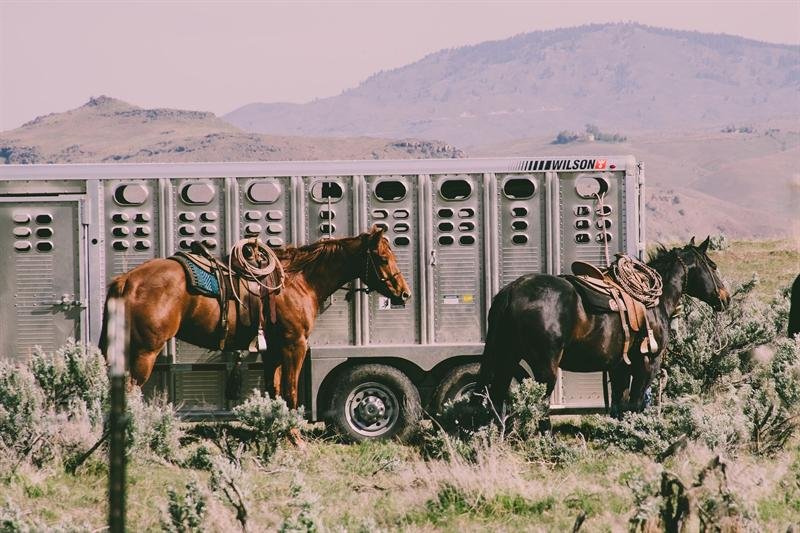
Trailer training a horse is about teaching him to travel comfortably and arrive calm, once he loads quietly. Start with short, quiet practice journeys, drive smoothly, and check your own licence and vehicle first, because a nervous horse is often reacting to a rough ride.
Preparing a horse for travel: the basics
Travelling is stressful for many horses. They are confined, balancing on a moving floor, and cannot see well where they are going. Preparation means building up gradually: first a horse who loads and stands calmly, then short practice journeys, then longer ones. Rushing the process, or taking a worried horse on a long first trip, often creates a lasting fear.
If your horse is not yet loading confidently, deal with that first; see loading a horse. This page covers what comes next: the journey itself, and the driver's side of the job.
Before you tow: licence, vehicle and insurance
- Licence: towing rules depend on when you passed your driving test and on the weight of the vehicle and trailer. Check your licence categories and the combined weights with the DVLA before you tow a loaded horse trailer, as a standard car licence may not cover it. This is the most common question behind searches for a horse trailer licence, and the answer depends on your own licence and your own setup.
- Vehicle and trailer: make sure your car is rated to tow the weight, and that the trailer is serviced, with working lights, tyres and brakes in good condition, and the hitch securely fitted.
- Insurance: check your vehicle and trailer insurance, and breakdown cover that includes horse transport.
- Weights: check the maximum towing weight of your vehicle and the gross weight of the loaded trailer, including the horse, tack and kit.
- Fit to travel: transport must not cause unnecessary suffering; plan the journey so the horse has enough space, ventilation and rest. Only fit and healthy horses should travel.
Towing a horse trailer in the UK is a skill in itself. Many owners take a towing course or a lesson with a qualified instructor before they start, especially for reversing and manoeuvring. If you prefer not to tow, see horse transport for help choosing a professional carrier, and horse ownership and the law for wider legal responsibilities.
Training the horse to travel: practice journeys
- Build on loading: your horse should walk on and stand quietly; see loading a horse.
- Practise standing: with the ramp up and a haynet, for several minutes, without moving.
- Take a short drive: around the block or the yard, five or ten minutes, with another person watching the horse if possible.
- Increase gradually: longer trips, different roads, with practice unloads at the other end.
- Visit a quiet place: such as a friend's yard, and unload, walk about and have a pick of grass before going home.
- Vary conditions: try different times of day and different weather, so he is used to a range.
- Finish on a calm note: a drink, a pick of grass and reassurance.
A horse that travels well with a companion may be anxious alone, and vice versa. Notice how he copes and adjust. If he sweats heavily, scrambles, paws or becomes frantic, go back a step. Travelling a horse that panics can be dangerous for you and for him, so ask your vet and an experienced trainer for help rather than pushing on.
Driving for the horse
Horses learn to balance in transit by bracing, and driving style is crucial. Accelerate, brake and corner gently, take bends slowly and avoid sudden stops. Leave extra space to the vehicle in front, and plan your route to avoid steep, bumpy or busy roads where you can. Many horses prefer to face the direction of travel, though in some trailers they travel at a slight angle or rear-facing, so follow your trailer maker's guidance.
- Pull away slowly and smoothly, as though carrying a tray of drinks.
- Slow down well before roundabouts, bends and junctions.
- Brake early and gently, and avoid harsh gear changes.
- Stop periodically on long journeys to check the horse and offer water.
- Keep the inside of the vehicle cool and well ventilated.
Kit and checks for the journey
| Item | Purpose |
|---|---|
| Leg protection, tail guard and poll guard | Prevent knocks and rubs; fit carefully so they cannot slip |
| Suitable rug for conditions | Avoid overheating or chilling; check regularly |
| Well-fitted headcollar and rope | Secure but safe; a quick-release knot or breakaway fitting |
| Haynet and water | Occupy the horse and keep him hydrated |
| Passport, contact details | Required with the horse; see passports |
| First aid kit and phone | For emergencies; see first aid kits |
| Spare kit | Spare headcollar, rope, torch, gloves and hi-vis clothing |
Pre-departure checklist
- Check tyres, including the spare, lights, brakes and the hitch and breakaway cable.
- Check the floor, ramp and partitions for damage, and the ventilation.
- Check your fuel, route, weather and journey time.
- Tack, rugs, boots and haynet ready, and passport in the vehicle.
- Load your horse calmly, secure the partitions and ramp, then check the horse before setting off.
On arrival and afterwards
Unload calmly and allow time to settle before tacking up. After long journeys, check the horse for heat, sweating, cuts or stiffness, and offer water. Horses that travel for long periods with their heads up can be prone to respiratory issues, so watch for coughing, a raised temperature or nasal discharge in the following days; see respiratory problems. Allow a tired horse time to rest, and avoid asking for hard work immediately after a long journey.
Trailer problems that persist, such as repeated scrambling, rearing in the trailer or refusing to travel at all, may have a physical cause. Rule out pain, such as a sore back, feet or teeth, with your vet, and consider support from a qualified trainer or behaviourist; see problem horses. For help with confidence, see confidence.
FAQs
Do I need a special licence to tow a horse trailer?
It depends on when you passed your test and on the weights of your vehicle and trailer. Check your licence categories and the combined weights with the DVLA before you tow.
How often should I stop on a long journey?
Plan regular breaks to check the horse and offer water, and take advice on maximum journey times for your situation.
Should I travel a horse tied up?
Many horses travel tied with a quick-release knot or a breakaway fitting, but practices vary; follow trailer guidance and your horse's temperament.
How do I get my horse used to travelling?
Build up gradually: standing in the trailer, a short drive, longer trips and practice unloads, finishing each time on a calm note.
Why does my horse sweat in the trailer?
Nerves, heat or poor ventilation. Check the temperature, rugging and driving style, and go back a step in training if he is anxious.
Can a nervous horse learn to travel?
Often yes, with patience, practice journeys and smooth driving. If he is frantic or unsafe, get help from a qualified trainer.
Useful official resources
- The British Horse Society Training, coaching and qualifications.
- World Horse Welfare: advice Handling and welfare guidance.