
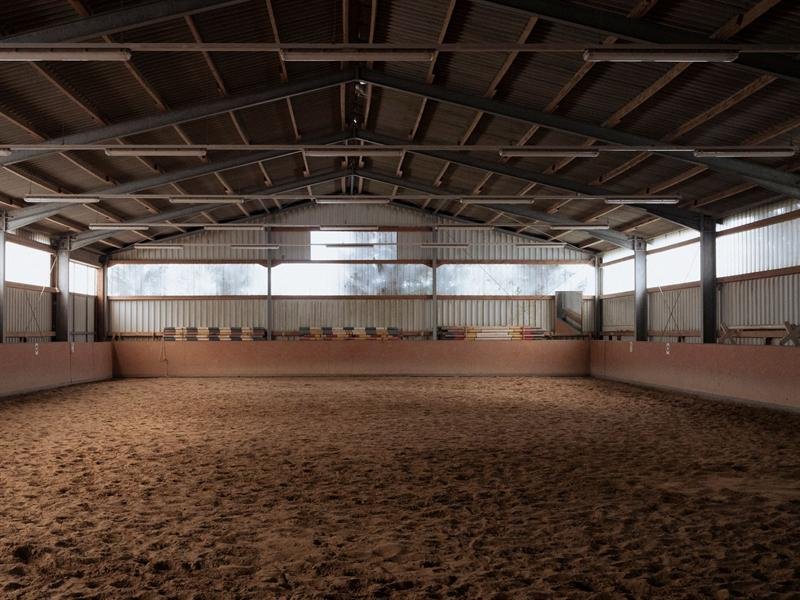
Arena hire gives you a safe, level surface for schooling, jumping or practice before a competition, particularly if you have no facilities at home. Check the surface, size, lighting and insurance before booking, and arrive knowing the yard’s rules.
Find arena hire venues by region
More regions are being added. Run a business that should be here? List it for free.
Why hire an arena?
Many owners have only a field, and working on uneven or wet ground is hard on horses and riders. Hiring an indoor school or outdoor arena lets you school on a consistent surface in any weather, practise a dressage test, jump safely, work a young horse or simply gain confidence somewhere enclosed. It is also useful for lessons, clinics and getting a horse used to a new environment before a show. Hire sessions range from a single hour to regular block bookings.
What to look for in an arena
- Surface: even, well maintained and appropriate for your work. Sand, sand and fibre, rubber mixes and wax-based surfaces are common, and each can ride deep, hard or dusty if neglected. Ask when it was last levelled and whether it is watered.
- Size: a standard dressage arena is 20m by 40m, with a larger version at 20m by 60m. Check the dimensions if you are practising a test, and ask whether the arena is marked with letters.
- Indoor or outdoor: indoor schools give weather protection and are often more popular in winter, while outdoor arenas can be cheaper and have better ventilation. Check lighting for winter evenings.
- Fencing and kickboards: secure, intact and safe, with a mounting block if needed.
- Equipment: ask whether jumps, poles and cones are included and whether there is a charge for use.
- Mirrors: useful for checking your position and your horse’s outline, though some horses are unsettled by them at first.
Surfaces explained
| Surface type | What to know |
|---|---|
| Sand | Common and affordable, can become deep or dusty without watering and levelling |
| Sand and fibre | Fibres add some stability and grip, but still need regular maintenance |
| Sand and rubber | Adds spring and can reduce dust, quality varies |
| Wax-coated mixes | Often more consistent in different weather, can be more costly |
| Grass or all-weather outdoor | Depends heavily on season and drainage, so ask about current conditions |
No surface is perfect. What matters is that it is consistent, not too deep or too hard and well looked after. If you are working a horse with joint or tendon problems, ask your vet which surfaces suit.
Practical points before you book
- Confirm the price, the length of the session and whether it is exclusive or shared.
- Ask about parking, trailer access, stabling and toilets, especially if you are travelling a distance. See our guide to horse transport if you do not have your own.
- Check whether a hat is required (it should be) and whether there are rules about lunging, loose schooling or children.
- Ask about insurance. You should carry your own public liability cover, such as through BHS or other membership, and many arenas also ask for proof.
- Check the cancellation policy, particularly for weather-related closures.
- Find out about payment, whether you must book online and how far ahead popular slots fill up.
Arena hire costs in the UK
| Option | Rough cost in 2026 |
|---|---|
| Outdoor arena, per hour | roughly £10–£25 |
| Indoor school, per hour | roughly £15–£35 |
| Cross-country course, per session | roughly £15–£40 |
| Block bookings or memberships | often discounted |
Prices vary by region and facilities. Some yards charge extra for jump equipment or lighting, and peak evening and weekend slots can cost more.
Finding arena hire near you
Start with riding schools, livery yards and equestrian centres in your area, as many hire out spare capacity. Local Facebook groups, riding club notice boards, tack shops and word of mouth from other riders are all useful. Ask which venues are quiet, which are well maintained and whether there are any restrictions. When our directory is live you will be able to search for venues directly. In the meantime, visit one or two options before settling on a regular booking.
Arena etiquette
Share the space sensibly: pass left hand to left hand, call “door” before entering, keep clear of horses jumping and pick up droppings. If you hire an exclusive session, still be considerate of staff and others. Always wear a hat that meets current standards, and be careful with young or excitable horses in shared sessions. Our guide to riding safety has more on safe habits.
Making the most of your session
Plan what you want to achieve before you arrive. A short warm-up, a clear focus and a proper cool-down make better use of paid time than aimless riding. If you are practising a test or a jumping round, ask whether you can set up in advance. Consider having a friend or instructor with you, which also helps with safety. Our schooling guide has plenty of ideas.
Questions to ask the venue
- How is the surface maintained, and how often is it harrowed or watered?
- Is the arena exclusive, or will other riders be in with you?
- Are there time limits for loading, unloading and warming up?
- Is there lighting, and is there a charge for using it?
- Can I bring an instructor, and do they need insurance?
- Are dogs and spectators allowed, and is there a viewing area?
- What happens in frost, heavy rain or other closures?
Hiring for young or nervous horses
A hired arena can be a great place to introduce a young or nervous horse to a new environment, but plan carefully. Arrive early so the horse can settle, walk it around the outside first and consider booking quiet times. Tell the venue what you are doing so staff can help avoid busy moments. Using an arena with good fencing and an enclosed layout reduces the risk of escape. If your horse is very anxious, ask a knowledgeable friend or instructor to help, and see our guides on building confidence and young horses for ideas.
Safety and good manners on a hired arena
Treat a hired arena as you would your own. Tell someone where you are riding and when, keep a phone with you, and know the location of the first aid kit and the yard’s emergency procedure. Close gates behind you, report any damage or hazards you notice and leave the surface tidy for the next user. A courteous approach keeps venues happy to welcome outside riders, and it makes it easier to book again.
FAQs
How much does arena hire cost?
Roughly £10–£25 an hour for outdoor arenas and £15–£35 for indoor schools in 2026, varying by region and facilities.
Do I need to be a member to hire?
Not usually, but some venues restrict hire to members or livery clients, so ask.
Can I take lessons in a hired arena?
Often yes, but check whether the venue allows outside instructors and whether the instructor needs their own insurance.
Do I need my own insurance?
You should have public liability cover, and many venues ask to see it. Membership of an organisation such as the BHS can include it.
What size is a standard dressage arena?
A small arena is 20m by 40m and a large one is 20m by 60m, so check which you need for your test.
Can I hire an arena for a clinic or event?
Many venues will hire for clinics, but terms differ, so discuss numbers, insurance, parking and facilities in advance.
Get your business listed
We're building the UK's most useful directory of arenas for hire. Run an arena or equestrian centre? List your business for free.
Useful official resources
- Farriers Registration Council Check a farrier is registered.
- RCVS Find a Vet Find a registered equine vet.
- Society of Master Saddlers Find a qualified saddle fitter.
- BAEDT Find a qualified equine dental technician.