
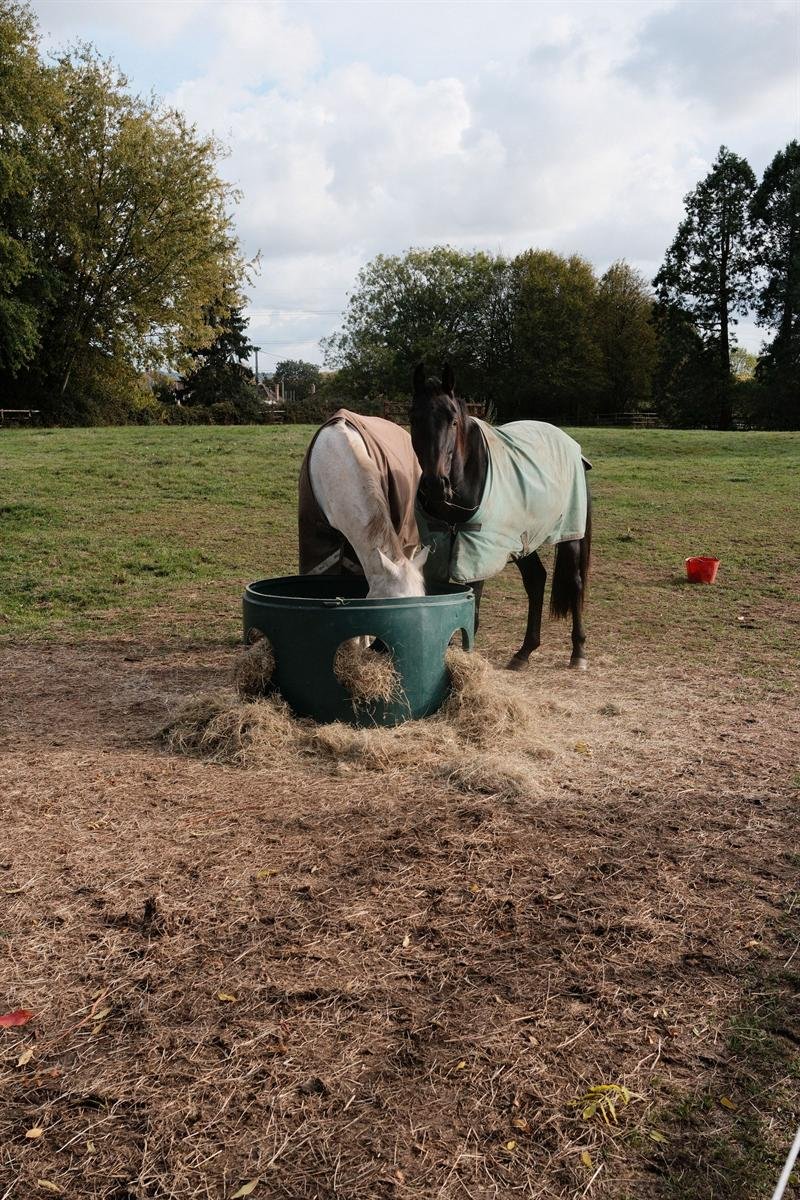
Feeding an older horse means keeping to forage-first principles while adapting to worn teeth, a slower gut, and conditions such as PPID that become more common with age. Start with a dental check and a vet health review, then build a diet of soft, easily chewed fibre, with extra calories and good-quality protein as needed, and monitor weight regularly.
How age changes a horse's feeding needs
There is no set age at which a horse becomes “senior”, and individuals vary hugely. Many horses are happily ridden into their twenties, and some in their thirties. However, with age a number of things commonly change. Teeth wear down and can become loose or missing, making it harder to chew long forage. The horse may digest fibre and absorb nutrients less efficiently. Some older horses develop hormonal conditions, arthritis, or chronic illness that affects appetite and weight. Muscle tends to be lost more easily, particularly over the topline. Meanwhile, others remain good doers and still need weight management. This is why the right plan is always based on the individual, not the birthday.
Start with the teeth
If your older horse is losing weight, quidding (dropping balls of partly chewed food), leaving hay, or choking, the mouth is the first place to look. An equine dental technician or vet should examine the teeth at least once a year, and often more frequently for horses with known dental problems. Sharp edges, loose teeth, gaps that trap food, and worn-out cheek teeth all reduce how much forage a horse can process. Our guide to dental care explains what to expect. In the UK, only vets and registered equine dental technicians should carry out dental work, and sedation or certain procedures must be done under veterinary direction.
Feeding an old horse with no teeth or poor teeth
A horse with few or no remaining cheek teeth cannot grind long hay effectively, but can still thrive with the right diet. The main strategy is to provide fibre in a form that can be eaten without much chewing:
- Soaked fibre pellets or cubes. Soaked until soft, these can form a mash that is easy to swallow and provides digestible fibre, as a substitute for some or all of the hay.
- Soaked or short-chopped fibre. Chopped forage or soaked hay replacement products can add bulk and moisture.
- Soft, well-made haylage or short-cut forage. Some horses cope better with softer forage, though quality and sugar content matter (see haylage).
- Little and often. Offer several smaller meals through the day, as an older horse may tire when eating.
- Warm, wet feeds. Many horses find them more appealing and easier to swallow, but always use clean buckets and discard leftovers, particularly in warm weather.
Always offer plenty of fresh water. Watch for choke signs such as coughing, nasal discharge containing feed, and distress, and call your vet at once if you see them.
Old horse losing weight
An old horse losing weight needs investigation, not just more food. Common reasons include dental disease, parasites, arthritis making grazing uncomfortable, PPID, organ disease, tumours, ulcers, competition from other horses, cold weather, or simply an inadequate diet. Ask your vet for a health check, and consider blood tests where appropriate. Once the cause is known, work with a vet or nutritionist to plan. The general approach is covered in our guide to helping a horse gain weight: ensure plenty of forage, add fibre and oil rather than large cereal meals, split into small feeds, and change gradually.
PPID horse diet
Pituitary pars intermedia dysfunction (PPID, sometimes called Cushing's) is a hormonal condition more common in older horses and ponies. It needs a vet diagnosis and usually ongoing veterinary management, and diet is one part of that plan. Points that are often discussed include:
- Some PPID horses are prone to laminitis or insulin dysregulation, so low sugar and starch feeds and careful grazing may be advised.
- Others lose muscle or weight and need extra protein and calories, which can seem contradictory to owners, so professional advice matters.
- Monitoring weight, topline and body condition regularly is useful.
Because the picture differs from horse to horse, do not guess. Ask your vet whether your horse has insulin dysregulation, and ask for referral to an equine nutritionist if required. See also laminitis and managing grass.
Sample approach to a senior diet
- Book a dental check and a vet health review, including discussion of PPID and other conditions.
- Weigh or weigh-tape the horse and record body condition score every few weeks.
- Provide forage in a form the horse can eat, aiming for roughly 1.5–2.5% of bodyweight in dry matter a day, adjusted to condition.
- Add soaked fibre, then, if needed, a feed suited to older horses with digestible fibre, oil and quality protein.
- Split concentrate feeds into small meals, and introduce changes over seven to ten days or longer.
- Review every few weeks and adjust, involving your vet if weight keeps falling.
| Problem | Possible approach | Check with |
|---|---|---|
| Poor or missing teeth | Soaked fibre mashes, chopped forage | Vet or equine dental technician |
| Weight loss | More forage, oil and fibre, small meals | Vet, then nutritionist |
| PPID with laminitis risk | Low sugar and starch, managed grazing | Vet |
| Muscle loss | Quality protein, appropriate exercise | Vet or nutritionist |
| Stiffness | Keep moving, comfortable feeding position | Vet |
Winter, weather and comfort
Older horses often struggle in winter, because they may lose body heat more easily and graze less effectively on poor grass. Extra forage is the first line of defence, as digesting fibre generates warmth. Check body condition under the rug by feeling, not just looking, because a thick winter coat hides weight loss. See senior horse care and winter care for wider guidance.
FAQs
What is the best feed for an older horse?
It depends on the horse. Many do well on good forage plus soaked fibre and a feed designed for older horses, but teeth, weight and health conditions should decide the plan.
How do I feed an old horse with no teeth?
Replace some or all of the hay with soaked fibre pellets, chopped forage or similar soft fibre, fed little and often, with plenty of water. Ask your vet to check the mouth.
Why is my old horse losing weight?
Common causes include dental problems, PPID, arthritis, parasites, illness and poor diet. A vet check is the right first step.
Do older horses need protein?
Quality protein supports muscle, and older horses can struggle to maintain it. Discuss amounts with a vet or nutritionist.
Can a PPID horse have hard feed?
Often yes, but low starch and sugar feeds are usually chosen. Plans vary, so ask your vet.
How often should an older horse's teeth be checked?
At least annually, and sometimes every six months if there are known problems.
Useful official resources
- World Horse Welfare: advice Body condition scoring and feeding guidance.
- British Equine Veterinary Association The professional body for equine vets.
- Code of Practice for the Welfare of Horses (gov.uk) Legal standards for feeding and care.