
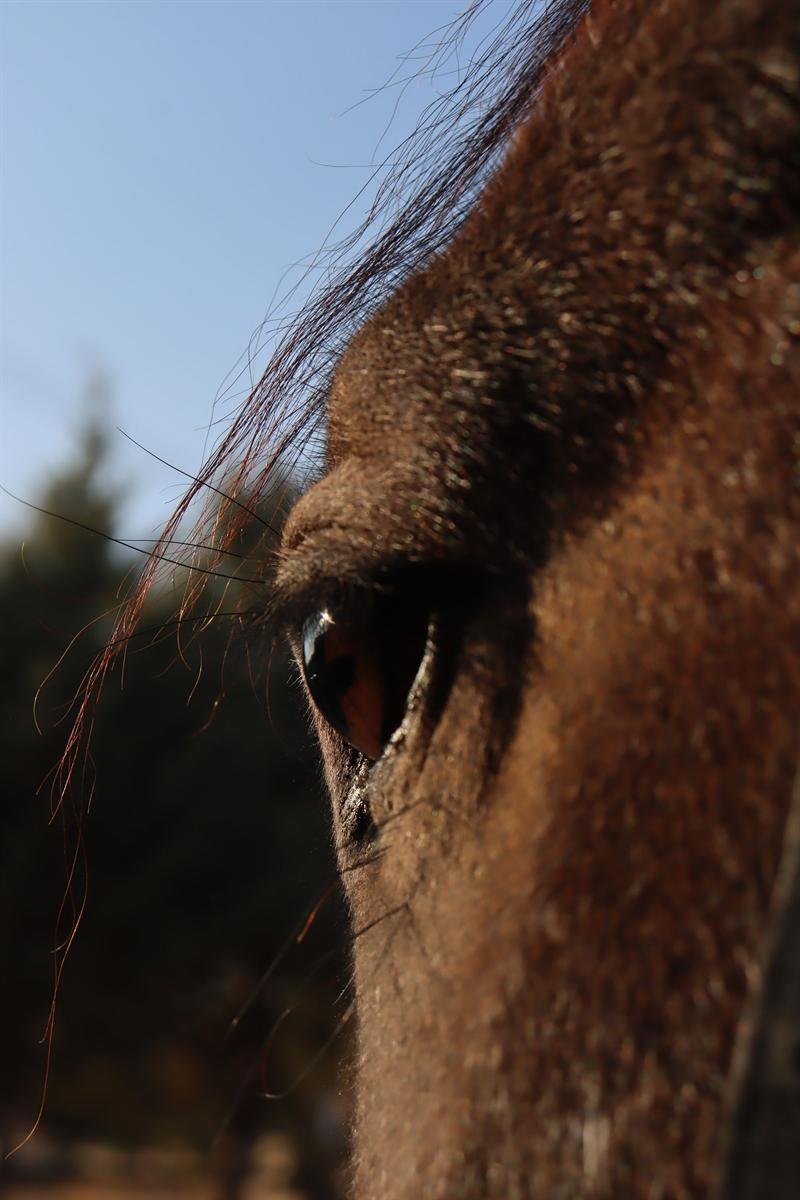
Horse eye problems are always worth treating as urgent: a horse with a closed, weeping, cloudy or swollen eye needs a vet that day. Horse eyes are large, exposed and easily injured, and conditions that look minor can progress to permanent damage within hours, so this is one area where waiting to see is the wrong call.
This guide explains the signs of a sore eye, the common causes in UK horses, what to do while you wait for the vet and how to cut the risk of problems in the first place. It is general education only and cannot replace an examination.
Signs of a horse eye problem
Horses are good at hiding discomfort, but a painful eye is hard to disguise. Look for:
- Squinting, a half-closed or tightly shut eye, or a drooping upper lid
- Excess tears, a weeping eye in a horse that is not usually watery, or a sticky yellow-green discharge
- Cloudiness, a blue-white haze, a visible spot or a change in colour on the surface
- A red or swollen conjunctiva (the pink lining) or a swollen eyelid
- Sensitivity to light, head shyness, or rubbing the eye on a foreleg, door or fence
- A small or irregular pupil, or a clear difference between the two eyes
- Bumping into things, or sudden spookiness on one side, which can mean reduced vision
Common causes of horse eye problems
| Problem | What it involves |
|---|---|
| Corneal ulcer or scratch | Damage to the surface from trauma, hay seed, thorns or a stable fitting. Can become infected rapidly |
| Uveitis (including recurrent uveitis) | Inflammation inside the eye that tends to flare repeatedly and can lead to blindness if unmanaged |
| Conjunctivitis | Red, weepy eyes from irritation, dust, flies or infection |
| Blocked tear duct | Constant clear watering and a stained cheek; a vet can flush it |
| Tumours | Growths on the lids or around the eye, such as sarcoids; see skin conditions |
| Cataracts | Opacity inside the lens, affecting vision |
Corneal ulcer in horses
The cornea is the clear surface of the eye. A scratch or ulcer in it is very painful and can be caused by something as ordinary as a bit of hay or a branch. Because horses live in dusty, bacteria-rich environments, ulcers can become infected quickly, and in the worst cases the eye can be lost. Vets often stain the eye to see the damage, and treatment usually involves frequent medication, sometimes through a small tube fitted to the lid, together with pain relief and protection from light and rubbing.
Horse eye infection and conjunctivitis
A mild watery eye with a little redness can be conjunctivitis, but the same signs can also be an early ulcer or uveitis, so it is not safe to guess. A horse eye infection often involves thick discharge, redness and swelling and needs proper diagnosis and treatment.
Uveitis
Uveitis, sometimes called moon blindness, is inflammation inside the eye. Signs include squinting, tearing, a small pupil, cloudiness and light sensitivity, and it often comes back. Long-term management through your vet can protect sight, so prompt diagnosis of the first flare matters.
Horse eye injury
Injuries to the lids and the area around the eye can look dramatic, and they can hide damage to the eye itself. Any wound close to the eye, swelling after a knock or a kick, or a scraped face after a fall needs veterinary assessment even if the eye looks fine.
What to do while you wait for the vet
- Phone your vet at once and describe exactly what you see, saying clearly if the eye is closed.
- Bring the horse into a quiet, dimly lit stable. Shade reduces pain from bright light.
- Stop the horse rubbing. A protective mask without hard edges, if your vet agrees, can help. Do not tie the horse in a way that risks it pulling back.
- Do not put anything in the eye that your vet has not prescribed. Leftover creams and drops can do harm.
- Do not force open a very painful eye, and never pick at anything stuck to the surface.
- Gently wipe discharge with clean, damp cotton wool, one wipe per piece, from the inner corner outward.
Eye treatment can require very frequent drops or ointment. If you are nervous about handling the eye, be honest with your vet. They can adapt the plan and show you how to do it safely.
Reducing the risk of eye problems
- Use a fly mask in the fly season to reduce irritation and spread of infection. See fly masks and fly protection.
- Check stables, fields and fencing for sharp edges, protruding nails and low branches at eye level.
- Use dust-free forage and good ventilation. See stable ventilation.
- Take care with haynets and feeders that put seeds and chaff at face height.
- Check both eyes daily and learn what is normal for your horse.
What will the vet do?
Your vet will examine the eye in a darkened area, often using a bright light and magnification. They may use a small dye to show up damage to the surface, check how well the eye makes tears and measure the pressure inside it. A horse with a painful eye may be given a sedative and a local nerve block so that the lids can be opened safely. Samples may be taken from the surface if infection is suspected.
Treatment depends on the cause. It may include medicated drops or ointment given many times a day, pain relief, and measures to stop the horse rubbing the eye. Some horses are referred to an equine hospital or a specialist, particularly for deep ulcers, recurrent uveitis or surgery. Make sure you know how often each treatment is due and for how long, because stopping early is a common reason for ulcers to return.
Plan for the long term as well. A horse with a history of eye problems may need protection from flies and bright sunlight, and your vet may want to see it at regular intervals. If the horse loses sight in one or both eyes, talk to your vet about whether it can still be ridden and how to keep it safe and settled.
Frequently asked questions
Is a weeping eye in a horse an emergency?
Treat it as urgent. Watering can be minor, but it can also signal an ulcer or uveitis, and these can worsen within hours.
Can I treat my horse's eye infection with leftover medication?
No. Some products are harmful to a damaged eye. Wait for your vet's advice and treatment.
Can a horse still be ridden with limited sight?
Many horses cope well with one blind eye, but this needs a vet assessment and a calm, experienced rider.
Why is my horse's eye watering on windy days?
Wind and dust can cause temporary watering, but if it persists or the eye looks sore, get it checked.
Can flies cause eye problems?
Yes, flies irritate the eyes and can spread infection. A well-fitted fly mask helps.
Will an eye ulcer heal?
Many do with prompt veterinary treatment, but delay can lead to deep damage, so early help matters.
Useful official resources
- RCVS Find a Vet Find an RCVS-registered equine vet near you.
- British Equine Veterinary Association The professional body for equine vets.
- World Horse Welfare: advice Health and welfare guidance for owners.