
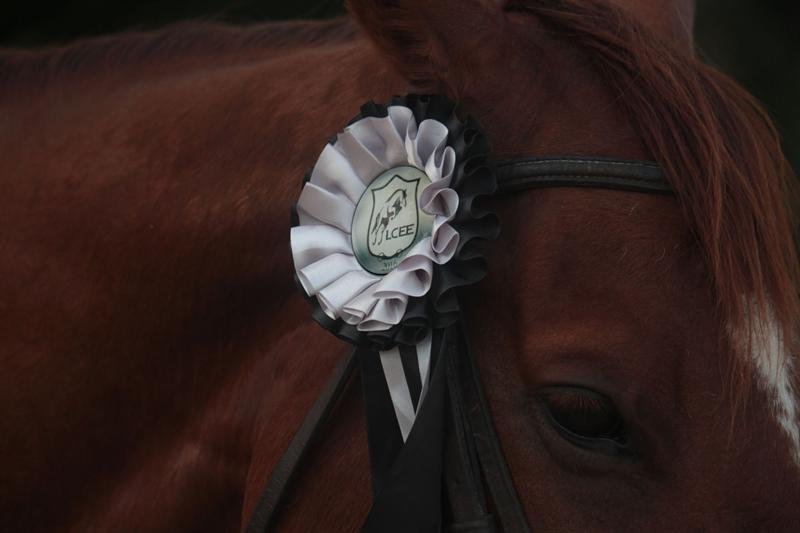
How are horses judged? It depends on the discipline: dressage judges give marks out of ten for each movement, showjumping and cross-country are scored by faults and time, and showing classes compare each horse against the standard for the class. Judging is rarely personal, and once you understand the structure, a test sheet or result tells you exactly what to work on.
This guide explains how dressage is judged, how showjumping scoring works, what showing judges look for and how to read a dressage test sheet so you can turn marks and comments into a training plan. Rules and marking systems are updated from time to time, so check the current rulebook for the competition you enter.
How dressage is judged
A dressage judge, usually seated at C, gives each movement in the test a mark from 0 to 10, with a short comment. Some movements carry a coefficient, which doubles their weight because they are considered especially important. Collective marks at the end cover areas such as paces, impulsion, submission and rider effectiveness. The total marks become a percentage, and the highest percentage wins.
Judges reward correct basics, such as rhythm, relaxation, contact, straightness and accuracy, above flashy movement. A calm, correct, balanced test often beats a spectacular but tense one. See British Dressage for how affiliated classes are organised.
What the dressage marks mean
Marks are given on a scale from 0 to 10. The wording differs slightly between rulebooks, but in general the higher half of the scale describes work that is satisfactory or better, and the lower half describes work with significant faults or movements that were not completed. As a rough guide:
| Mark range | General meaning |
|---|---|
| 8 to 10 | Good to excellent: correct, harmonious and well executed |
| 6 to 7 | Fairly good to good: sound, with some faults or lack of quality |
| 5 | Sufficient: acceptable but with clear weaknesses |
| Below 5 | Insufficient to very bad: significant errors, or the movement was not shown |
Check the current rulebook for the official wording, as it can change.
Showjumping scoring explained
Showjumping scoring is objective. Penalties, called faults, are added for knockdowns, refusals and exceeding the time allowed, and the lowest score wins. Officials record faults and enforce the rules, but there is little subjective marking. If riders are tied on faults, a jump-off or a time decides the result, depending on the class.
The skill is in the plan: take time on turns, balance the horse, see the stride and ride a rhythm that you can keep to the last fence. See British Showjumping for grades and class types.
Cross-country and eventing scoring
Eventing combines three phases into one score. Dressage marks convert into penalties, and cross-country and showjumping add penalties for faults and time. The lowest total wins. Because dressage is the only subjective phase, a good test sets a strong foundation, but the jumping phases can change the order very quickly. Read about eventing for the full picture.
Showing judging criteria
In showing, the judge compares horses against the standard for the class. The exact criteria depend on the class type, but they typically include:
- Conformation: the horse's build, balance and soundness, usually assessed in hand or standing.
- Movement: the quality and regularity of walk and trot, and where relevant canter and gallop.
- Presence and type: how well the horse fits the type or breed standard for the class.
- Manners and way of going: in ridden classes, how obedient, balanced and pleasant the horse is to ride.
- Rider and turnout: in many classes, the rider's position and effectiveness, and neat, correct presentation.
A good judge will explain placings to interested competitors, and it is worth asking politely and at a sensible moment. See showing for more on classes and preparation.
How to read a dressage test sheet
- Read the comments first, before looking at the marks, because they explain the reasoning.
- Highlight repeated words such as "tense", "late" or "above the bit". They are your training plan.
- Look at which movements scored lowest, and whether the cause was a single mistake or a general weakness.
- Check the collective marks, which show how the judge saw the test as a whole.
- Compare with a previous sheet to see progress.
- Take the sheet to your instructor and plan the next sessions. See schooling.
| Common comment | What it usually means |
|---|---|
| Tense or hurried | The horse is not relaxed; slow down and work on rhythm and settling |
| Not through | Energy is not flowing from behind into the contact |
| Inaccurate | Shapes, transitions or markers were missed; practise geometry |
| Lacks bend | The horse is not flexing correctly through the body on turns and circles |
| Above the bit | The head is carried too high and the contact is lost; work on suppleness and acceptance of the aids |
Using judging feedback to improve
Treat marks as information. A repeated comment across several tests, from different judges, is almost always something real. Pick one or two themes to work on at a time rather than trying to fix everything, and film your schooling sessions so you can see what the judge saw. Ask your instructor to help you ride a practice test and mark it, so you learn to feel the difference between a 5 and a 7 for yourself.
In jumping, watch video of your rounds and note where faults came from: a rushed turn, a poor approach or a horse that was not listening. Often the same pattern repeats.
Why scores differ between judges
Dressage and showing are partly subjective, so individual judges can see things differently, particularly on quality of paces and overall impression. Judges are trained and work to published criteria, and at higher levels several judges score each test and results are combined, which helps to reduce variation. If you get a surprising score, look for what is consistent across several outings rather than reacting to one result.
What stewards and officials do
Judging is only part of the picture. Stewards check that tack, dress and hats comply with the rules, and they can stop a rider or ask for equipment to be changed. Ringside officials record faults, keep time and make sure the class runs fairly. Course designers set the questions that showjumpers and eventers face, and the judges and officials then apply the published rules to what they see. If you are unsure about a ruling, wait until you have left the arena and ask politely; officials are generally happy to explain.
Preparing to be judged
Good preparation helps you show your horse at its best. Learn your test thoroughly, including the positions of the markers and the shape of each movement, because accuracy is an easy way to gain marks. Present your horse neatly and safely, and arrive early enough to warm up without rushing. In showing, practise the individual show or in-hand trot-up so that your horse stands and moves calmly in front of a stranger. In jumping, learn the course and plan your turns before you enter. Finally, keep in mind that judges only see what you show them, so a confident, smooth performance usually scores better than an ambitious one that falls apart.
FAQs
Why do judges' scores differ?
Dressage and showing are partly subjective, so individuals can score slightly differently. At affiliated level, training and published criteria aim to reduce variation.
Can I question a result?
You can politely ask the judge or organiser for clarification, and formal appeal procedures exist for rule breaches. Matters of judgement cannot usually be appealed.
What is a coefficient in dressage?
A multiplier that gives certain important movements extra weight in the final score.
How is a dressage percentage worked out?
The total marks achieved are divided by the maximum possible marks for the test and expressed as a percentage.
Are showjumping rounds judged subjectively?
No. Faults and time are recorded objectively, and the lowest score wins, with a jump-off in some classes.
What do showing judges look for?
Conformation, movement, presence, manners and, in ridden classes, the horse's way of going and the rider's performance, all measured against the class standard.
Useful official resources
- British Dressage Rules, levels and how to register.
- British Showjumping Rules, classes and membership.
- British Eventing Levels, rules and entries.
- The Pony Club Competitions and rallies for young riders.